Featured
Cybersecurity
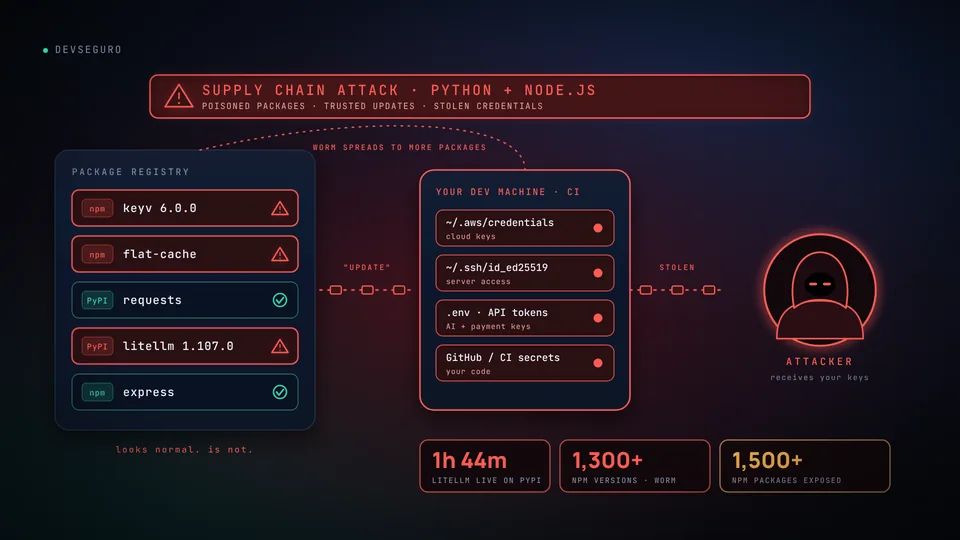
Python and Node.js Supply Chain Attacks (October 2026): What Happened and How to Protect Your Business
Poisoned Python and npm packages are stealing keys from developer machines. Three recent incidents, what they cost, and how to defend against them.
Read the article →
Python and Node.js Supply Chain Attacks (October 2026): What Happened and How to Protect Your Business
Poisoned Python and npm packages are stealing keys from developer machines. Three recent incidents, what they cost, and how to defend against them.
Read →
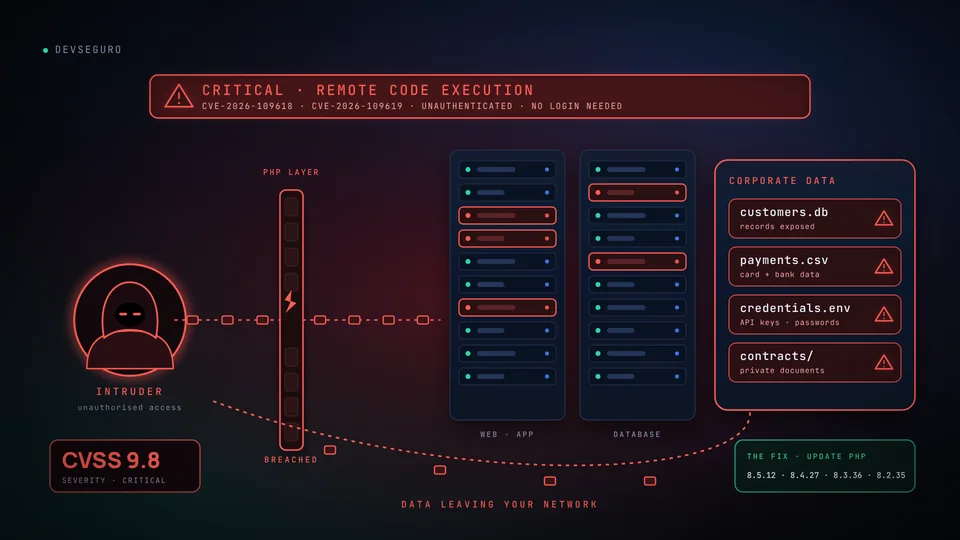
Critical PHP Vulnerabilities (October 2026): How to Protect Your Website and Server
PHP released emergency fixes for two critical remote code execution flaws. What they are, who is exposed, and what to do today.
Read →
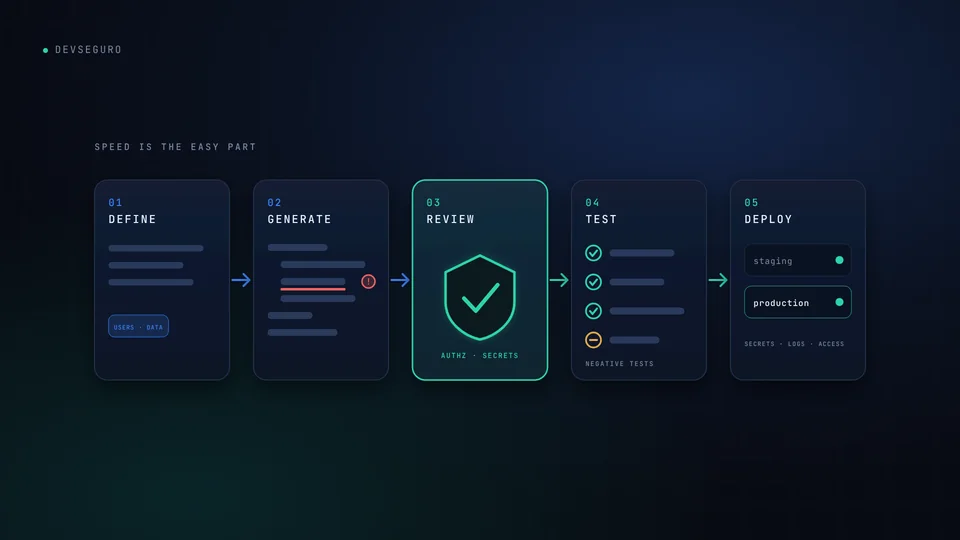
The Hidden Security Risks of AI-Built Websites and Web Applications
AI can write a polished app fast. Five places where generated code goes wrong, and a workflow that catches them.
Read →
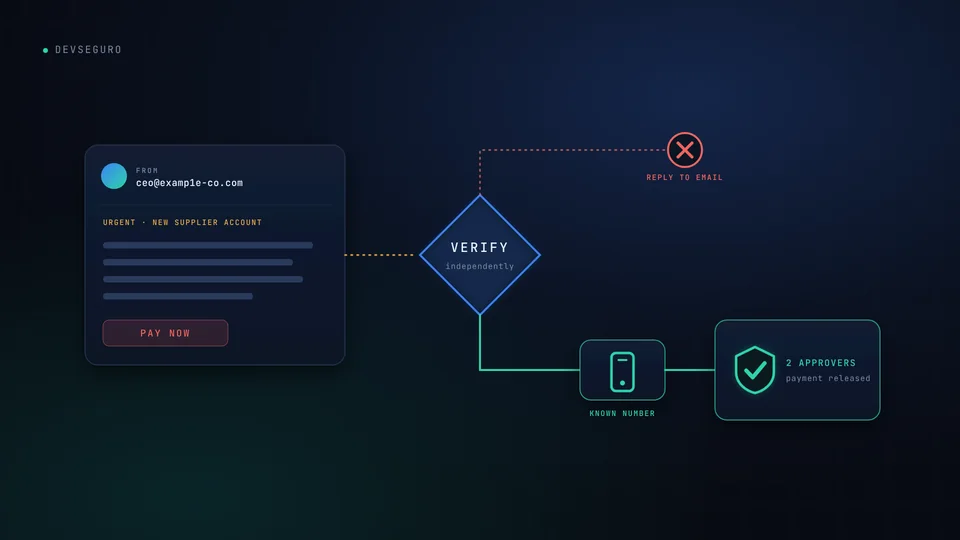
AI-Powered Phishing and Business Email Fraud: How to Protect Your Company
Convincing fake emails, cloned voices and urgent payment requests. Five practical controls that reduce the risk.
Read →
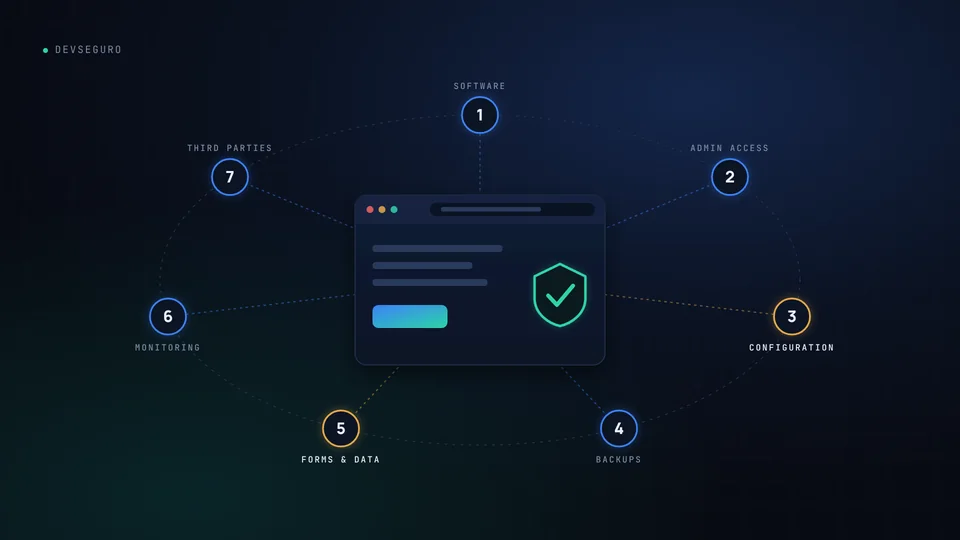
Your Website Looks Professional. Is It Actually Secure?
A professional-looking site can still be exposed. Seven risk areas to check, with a self-check list you can use today.
Read →
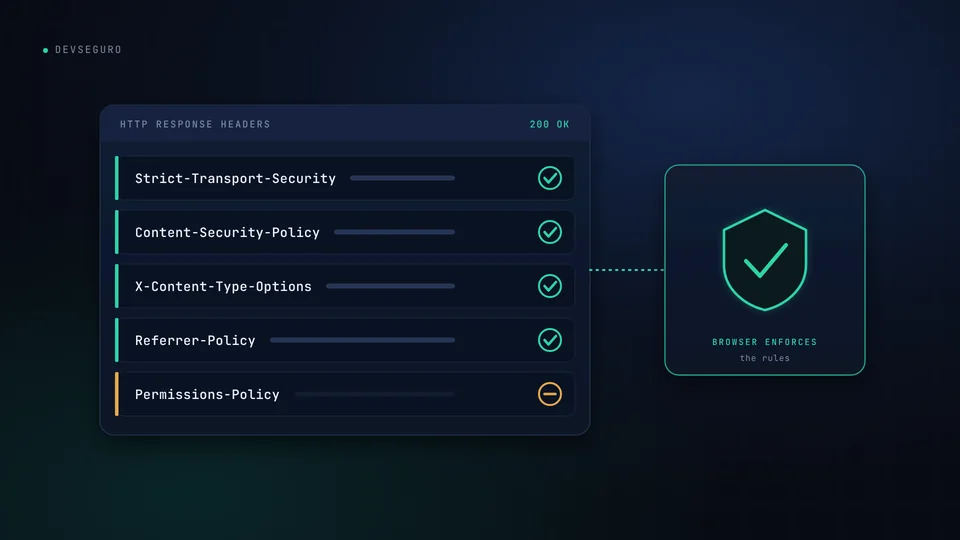
Security headers explained, one at a time
What CSP, HSTS and friends actually do, and how to check whether your own site has them.
Read →
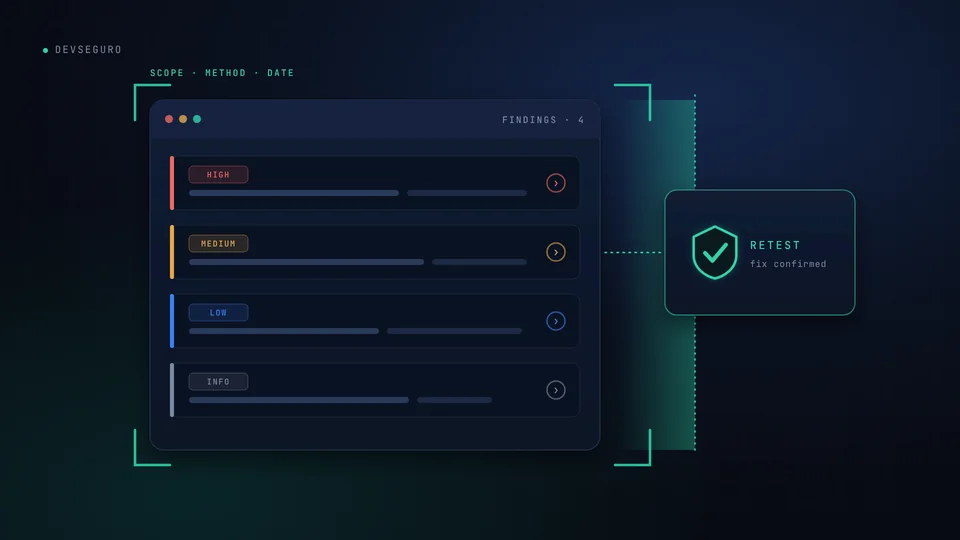
What a security assessment actually finds (and what it doesn't)
A walk through what shows up in a real report — severity levels, evidence, and the gap between "no critical findings" and "secure."
Read →
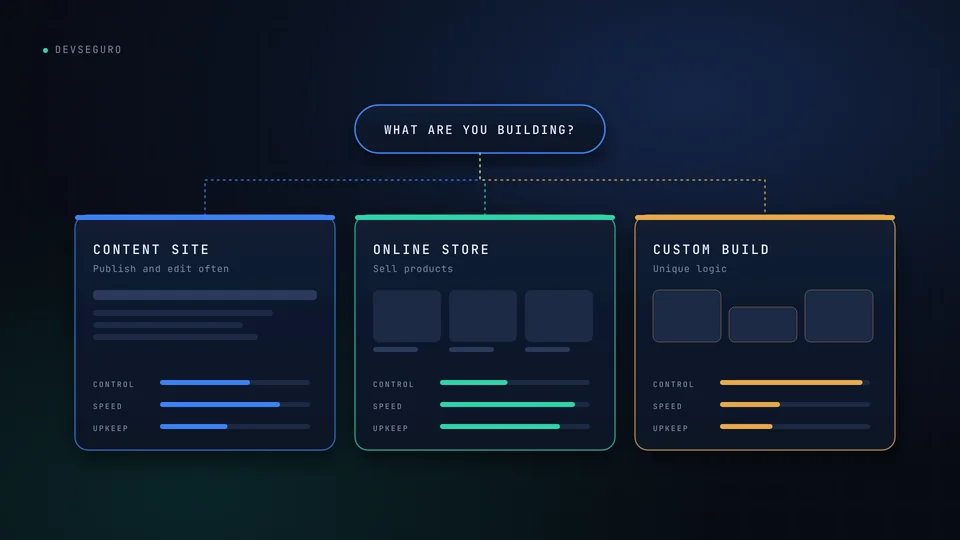
Choosing between WordPress, Shopify, and custom code
A framework for matching platform to project, not a "custom is always better" pitch.
Read →
✓
Our rule for this page
Same policy as the Work page: an article goes live when it's actually finished and fact-checked, not filled with placeholder copy pretending to be a real post.